Research
We study how sheets of cells (epithelial cells) rearrange, migrate, and adhere to one another in the forming epidermis, or hypodermis, of the early C. elegans embryo.
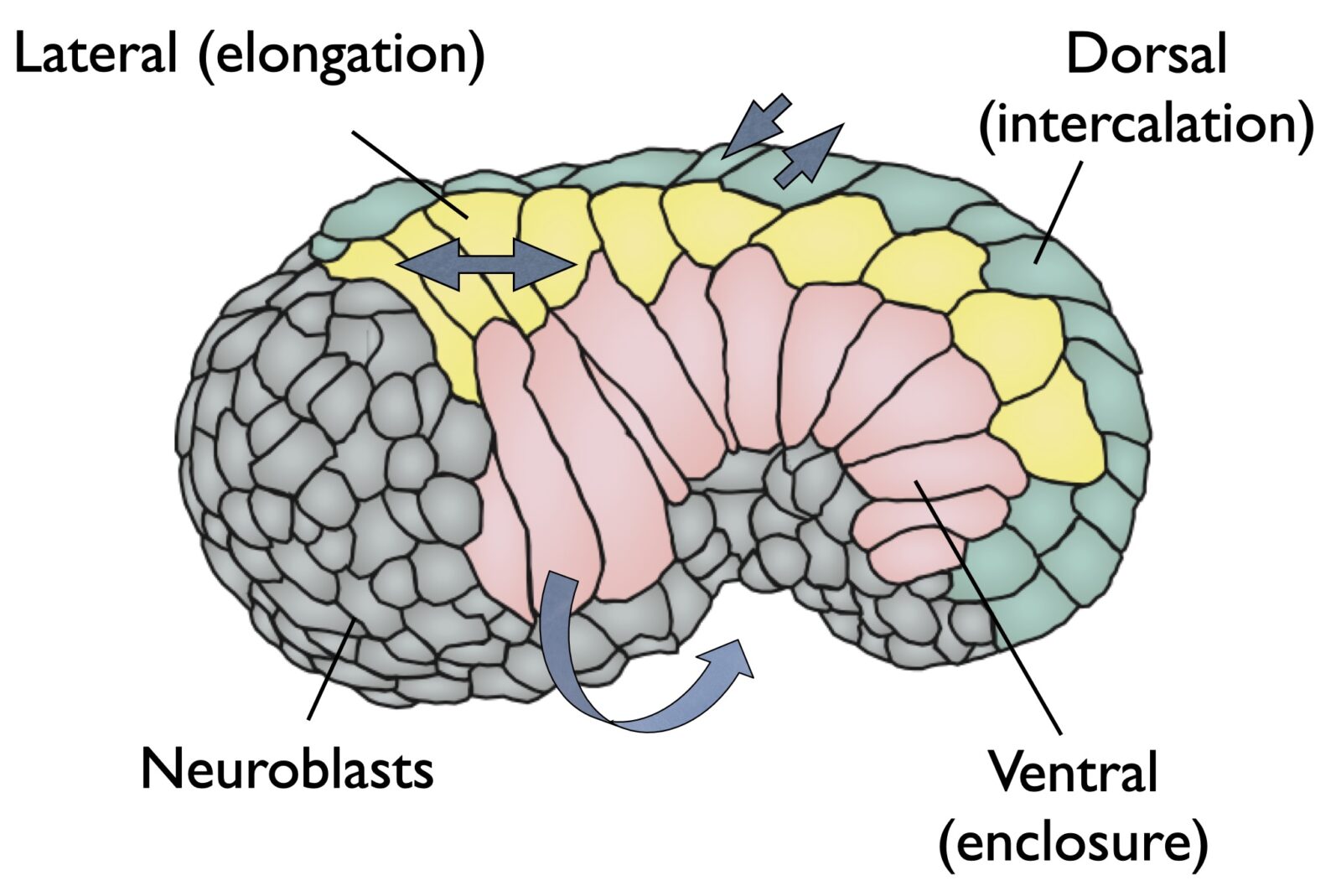
We use a variety of approaches to study epithelial morphogenesis, including genetics, genomics, and advanced microscopy. Because the events we study occur in all animal embryos, what we are discovering has relevance for understanding fundamental processes during normal embryonic development. By studying what molecular processes control cell movements and cell adhesion, we hope to shed light on basic mechanisms of cancer metastasis, and on the events that lead to common birth defects.
-
Why Study Worms?
-
Dorsal Intercalation
-
Ventral Enclosure
-
Elongation
-
Cadherin-based adhesion
-
Microscopy
Funding
Our work is supported by the National Institute of General Medical Sciences, NIH (current award #R35 GM145312).